
The best science projects are hands on, and the best Halloween activities involve something spooky or just a bit gross. The eyeball STEM challenge is the perfect bridge between Halloween and STEM activities for kids. This Halloween STEM activity is the perfect addition to our collection of Halloween activities for preschoolers.
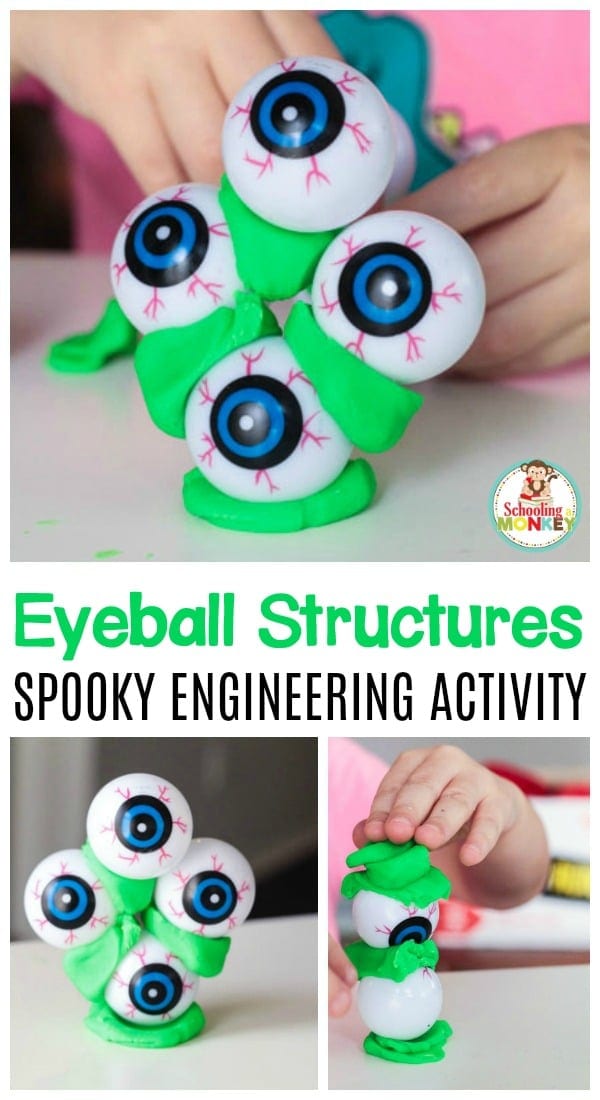
Young kids will love completing this eyeball STEM challenge, and they just might be surprised at how difficult it is to stack a round object!
You can also challenge older kids to see if they can make 3D objects. Younger kids can make one tall tower of eyeballs. It’s spooky, gross, and tons of learning fun!
Table of Contents
Make Science Fun with the Eyeball STEM Challenge
You just need two materials to make this STEM challenge a success!
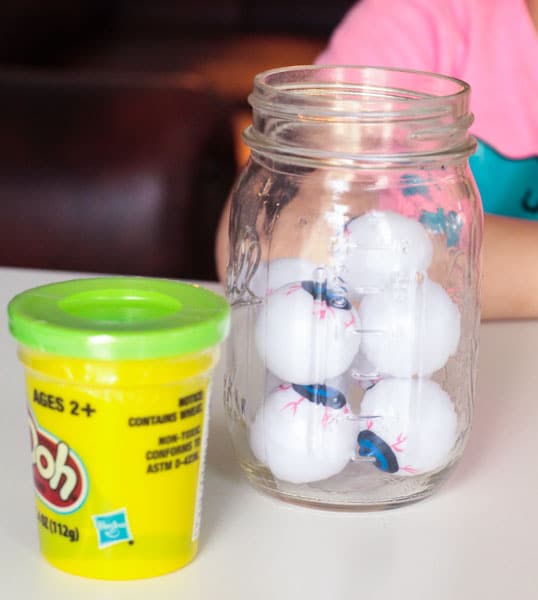
All you need for this activity is plastic eyeballs and play dough. Encourage students to think critically and problem-solve as they build their structures.
This Halloween STEM project is sure to engage preschool and kindergarten students in a fun and educational way. Get ready for a spooky and educational experience with the eyeball STEM challenge!
This post contains affiliate links for your convenience.
Supplies for the Eyeball STEM Challenge
Creating 3D eyeball models for Halloween is like baking a cake for a celebration; you need the right ingredients and steps to bring your spooky vision to life! Here is what you’ll need to make these 3D eyeball models for Halloween!
- Play dough (we used green for the spook factor)
- Plastic eyeballs
STEM Teaching Resources
These teaching resources will make your STEM classroom more fun and rewarding for your students!




Eyeball STEM Challenge Lesson Plan
Give the kids some play dough and some eyeballs. Tell them their challenge is to create the biggest structure they can using just those two ingredients.
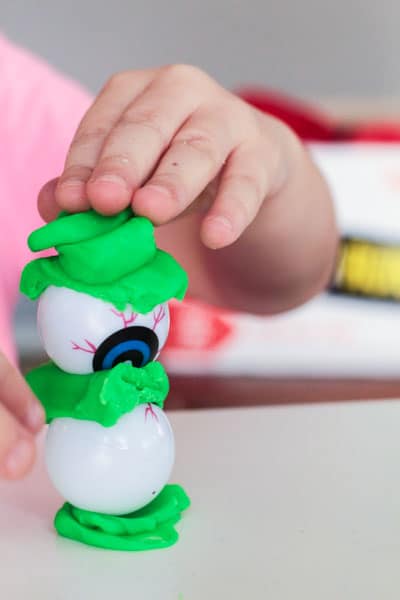
Some children may try to stack the eyeballs straight into the air, while others might try to create a larger base and create a more stable structure.
The trick to this activity is including enough play dough so that the eyeballs don’t bounce away.
The eyeballs don’t really stick to the dough, which gives this activity more of a challenge. Letting the kids experiment with the materials can lead to unique and creative structures.
Eyeball Tower Construction Tips
Here are some tips for transforming this Halloween activity for preschoolers into an educational preschool Halloween STEM activity!
- Encouraging teamwork among the children can lead to more elaborate and stable designs.
- Adjusting the amount of play dough provided can alter the difficulty level of the challenge.
- Observe Students’ problem-solving for insights into their thought processes and creativity.
- Encourage the kids to test different ways to balance the eyeballs on the play dough.
- Guide them to experiment with building techniques to create taller and more intricate structures.
- Discuss the concept of stability with the children as they construct their eyeball towers.
- Introduce the idea of engineering by asking the kids to think about how they can make their structures stronger.
- Encourage preschoolers to share their designs and strategies with each other and work as a team.
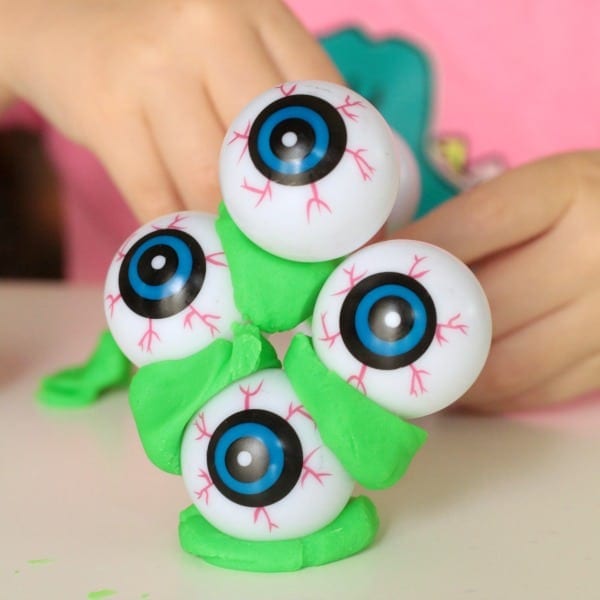
Kids will be tickled that they can use eyeballs as a building material.
Take lots of pictures of the structures that your kids make. You might be surprised at how high they can make their towers just using these two materials.
More Halloween STEM Activities
Halloween STEM activities for young children are like treasure hunts for curious minds, blending fun and learning in a spooky adventure! Here are some other Halloween STEM activities for young children you can try in the classroom or at home!
11 Easy, Not So Scary Halloween Activities for Preschoolers
11 Easy and Adorable Halloween Activities for Toddlers
20+ Exciting Halloween STEM Activities for Kindergarten
The Benefits of Halloween STEM Activities for Young Children
Why is STEM important for kids age 3 to 7? Here’s a few things that kids can learn when doing hands-on STEM in their younger years.
STEM activities for preschoolers promotes critical thinking, problem-solving, creativity, and collaboration. Hands-on STEM activities help develop fine motor skills, enhance cognitive abilities, foster curiosity, and encourage a love for learning.
Early exposure to STEM concepts lays a strong foundation for future academic success, supports social-emotional development, and prepares children for a technology-driven world. STEM activities can also improve children’s communication skills through collaboration and working on projects together.
Preschool STEM activities provide a hands-on approach to learning, making concepts more tangible and easier to understand. Introducing STEM early on can spark a passion for science, technology, engineering, and math that can last a lifetime!